
Sizing Guide
Unneeded returns are tricky for a small business like ours, so please measure feet carefully and refer to the size information in the product description of each shoe.
Guide: How to Measure Children’s Feet Accurately
Properly fitted shoes are important for comfort, balance, and healthy foot development. Here’s an easy, step-by-step method you can use at home to get accurate measurements.
What You Will Need
A sheet of plain paper
A pencil or pen
A ruler or measuring tape
Socks your child normally wears
A flat wall and hard floor surface
Step-by-Step Instructions
1. Prepare the Setup
Place the paper on the floor with one edge against a wall. Have your child stand on the paper with their heel touching the wall. Ensure your child stands straight with weight evenly distributed.
2. Trace the Foot
Holding the pencil straight up (not angled), trace around the foot from heel to toes.
Tip: If your child wiggles, you can lightly hold their ankle or have them hold onto a chair.
3. Mark the Longest Point
Find the longest toe (often the big toe or second toe) and draw a line at the tip. This is the measurement point.
4. Measure the Foot Length
Use the ruler to measure from the heel line to the toe line in centimeters.
5. Repeat on the Other Foot
Feet are often slightly different sizes. Always use the larger measurement when choosing shoes.
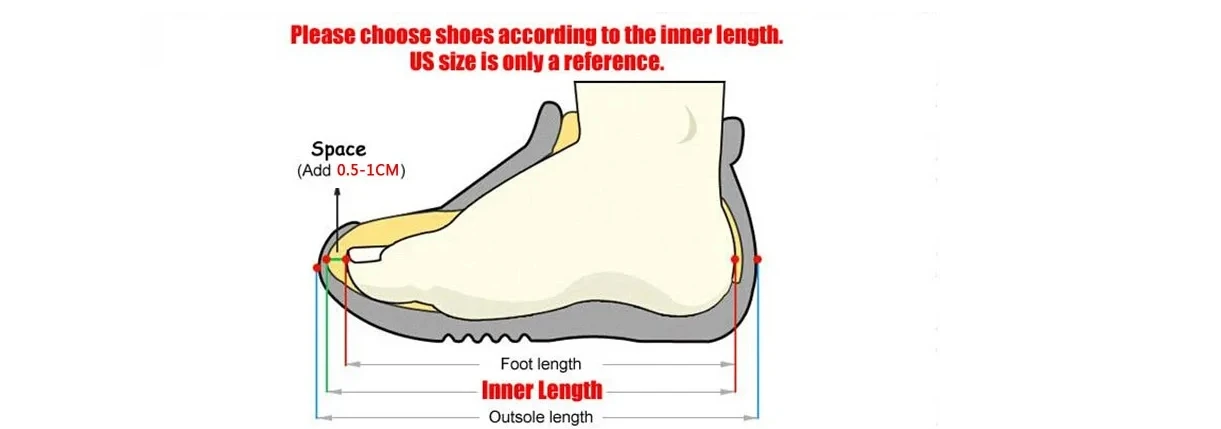
6. Add Growing Room
For children’s shoes, add:
0.5–1.2 cm (¼–½ inch) of space for growth and comfort.
7. Check Size Charts
Compare your measurement to the specific shoe's size chart—sizes vary between companies and shoes. Sizing guide marked red on each product page.
Correct insole length of shoe: Child's foot measurement (usually in cm) plus ~ 1cm
Tips for Better Accuracy
Measure feet at the end of the day when they are slightly larger.
Have your child wear the type of socks they’ll use with the shoes.
Re-measure every 2–3 months, as kids grow quickly.